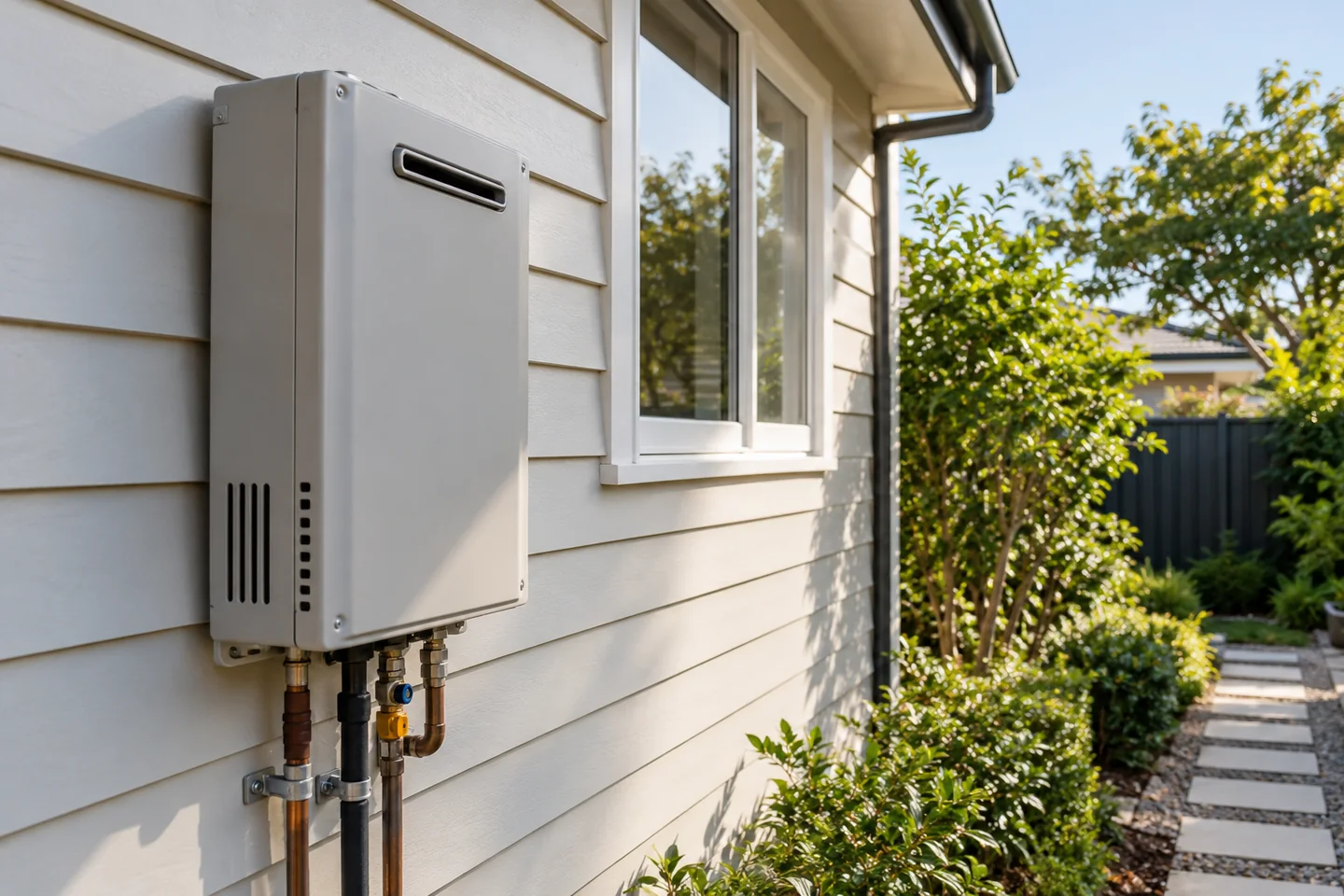
Continuous-flow systems
These systems heat water as it is needed. Some use gas and others use electricity. An external appearance alone may not establish the exact model or configuration. Look at an existing manual, property record or a label that is safely visible.
For an initial conversation, note whether the change concerns a particular outlet or your usual use of hot water. Record any displayed message accurately if you have already seen it. Do not alter controls or repeatedly restart the unit to recreate a fault.
Storage cylinders
Stored systems keep a supply of heated water in a cylinder. Energy source, capacity and household use vary. A description such as “storage cylinder, model unknown” is more honest than guessing from its colour or size.
Mention changes in routine, such as more people staying in the home, while keeping those observations separate from a conclusion about the cause. Do not remove covers, change temperature controls or touch electrical connections.
Heat-pump hot water
A heat-pump system uses a different heating process from a conventional electric resistance cylinder. It may have a fan and other external components that produce an operating sound. What is normal depends on the model and installation.
Use the manufacturer’s information for operating guidance. If a sound has changed, describe when you noticed it and whether an existing display message appeared. A written description cannot certify the equipment as safe.
A system can involve more than one trade
The proposed work determines the credentials required. Plumbing, electrical and gas tasks are not interchangeable merely because they occur around one appliance. Ask the provider which licence or registration applies and verify it with the relevant regulator.
A website can help you prepare a question, but it cannot confirm an installation or perform a safety check. If you suspect danger, stop using the observation tool and follow official emergency guidance.