For a refrigerator, identify the compartment
Explain whether the change involves the fridge compartment, freezer or an external display. Mention the period over which you noticed it and any ordinary change in household use. A new noise or temperature impression alone does not identify a failed part.
Do not open electrical or refrigeration components. If food safety may be affected, consult current official food-safety guidance and the appliance manufacturer; this page does not decide whether particular food is safe to eat.
For an oven, record the function
The mode selected, the point in the cooking process and an existing display message can help frame a question. Describe what happened without running extra cycles to reproduce an unsafe condition.
Do not bypass door locks, remove panels or adjust connections. Follow the manufacturer’s instructions for ordinary user care. Damage, unusual smells or other safety concerns warrant stopping and seeking suitable professional advice.
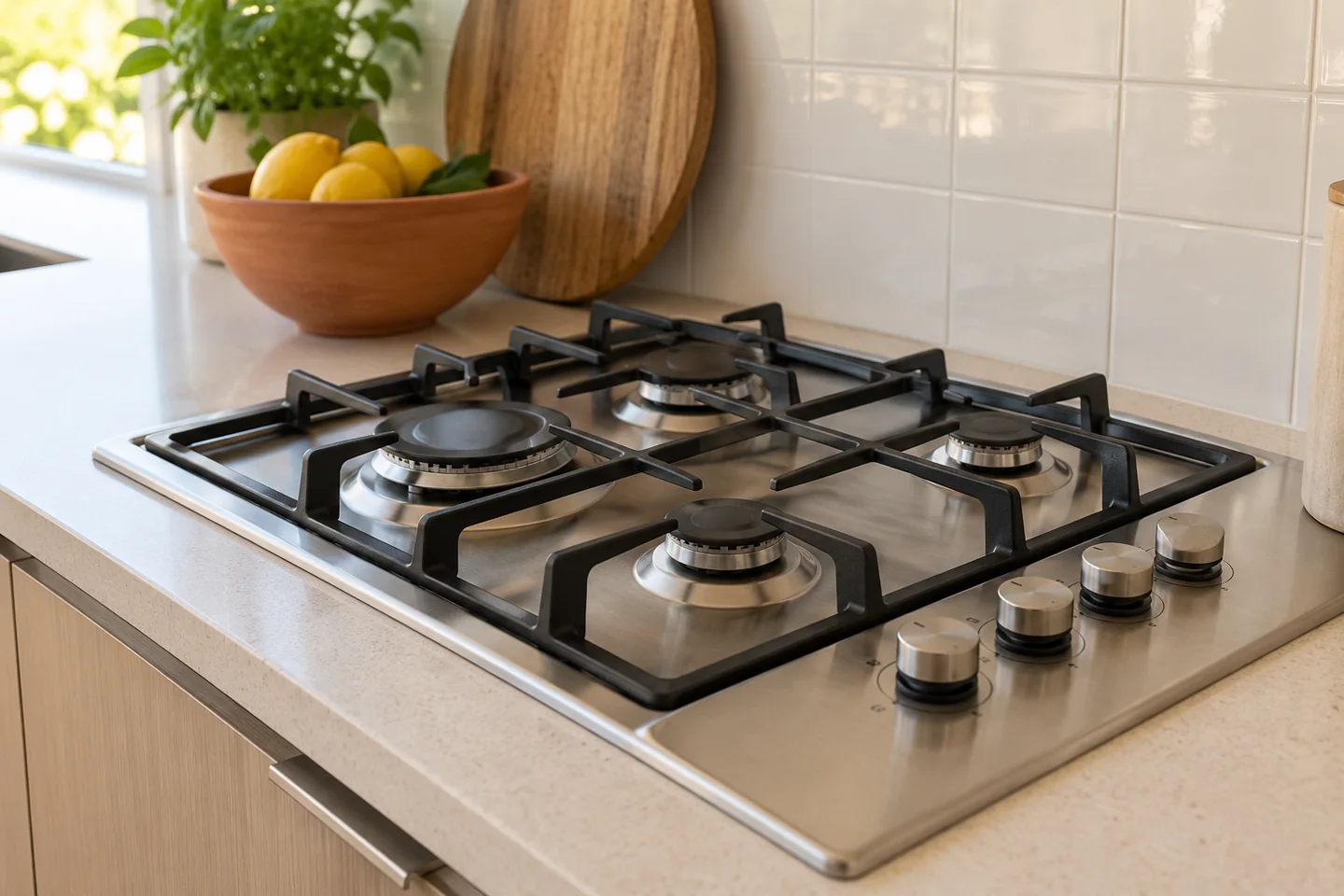
For a cooktop, separate the controls
A gas burner, electric element and induction zone are different systems. Identify the affected part in ordinary terms and explain what you already observed. There is no need to test every control for this website.
Gas-related concerns belong with the relevant qualified gasfitter or emergency channel. Electrical work belongs with an appropriately qualified professional. The safety page explains why suspected gas emergencies should not wait for an online reply.
Ask questions that remain useful
What assessment is proposed? Which credentials cover it? What charges and terms apply? How will additional work be authorised? These questions are useful even when the technical cause is not yet known.
Meluvorin neither lists service providers nor verifies their availability. Use the preparation checklist to organise your own information, then make arrangements directly with an appropriate provider.